What is an acquiring bank?
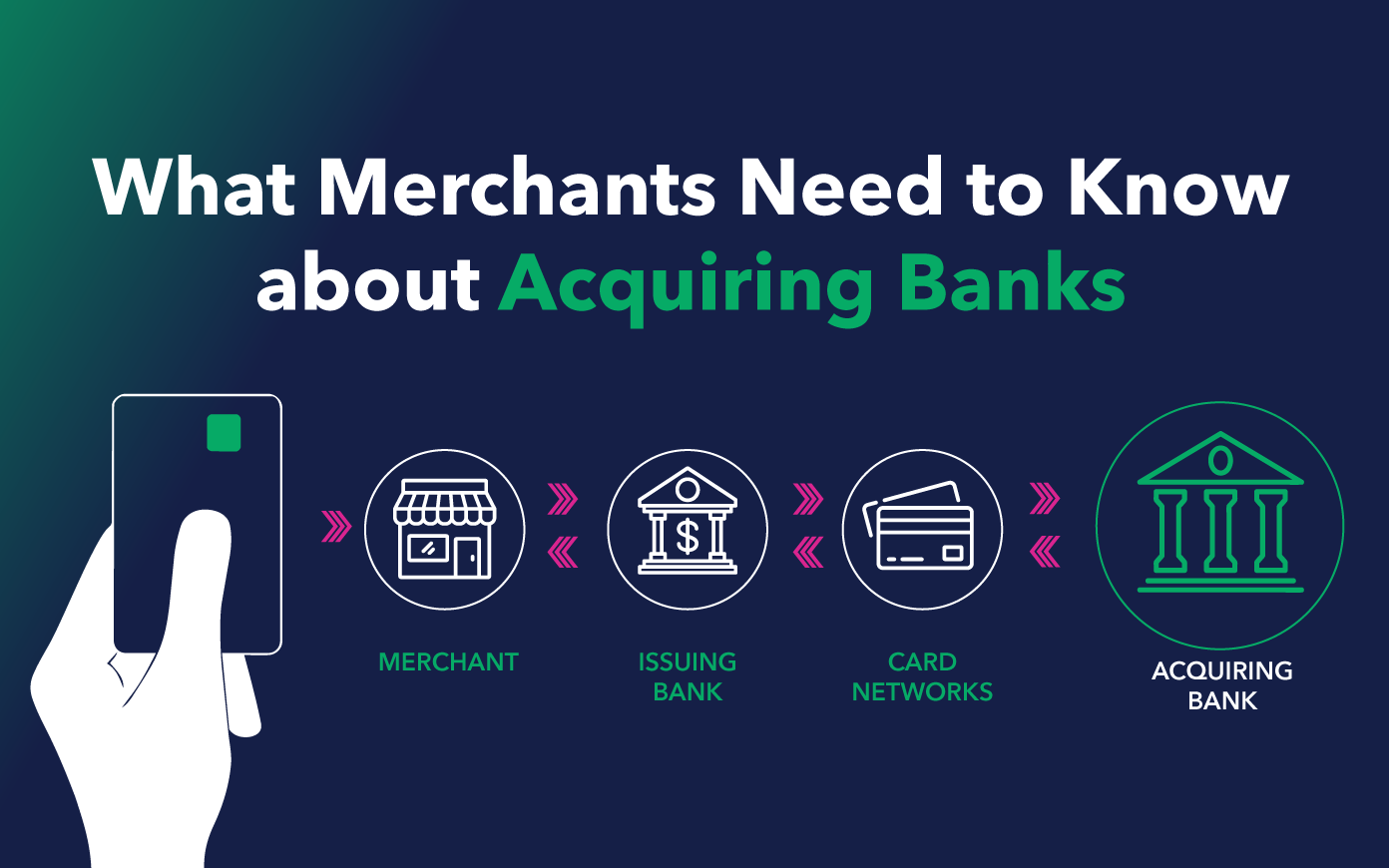
An acquiring bank, also called an “acquirer,” is a financial institution that enables businesses to accept credit and debit card payments. The acquiring bank acts on behalf of the merchant, facilitating the authorization, clearing, and settling of card transactions through the applicable card networks and the customer’s issuing bank.
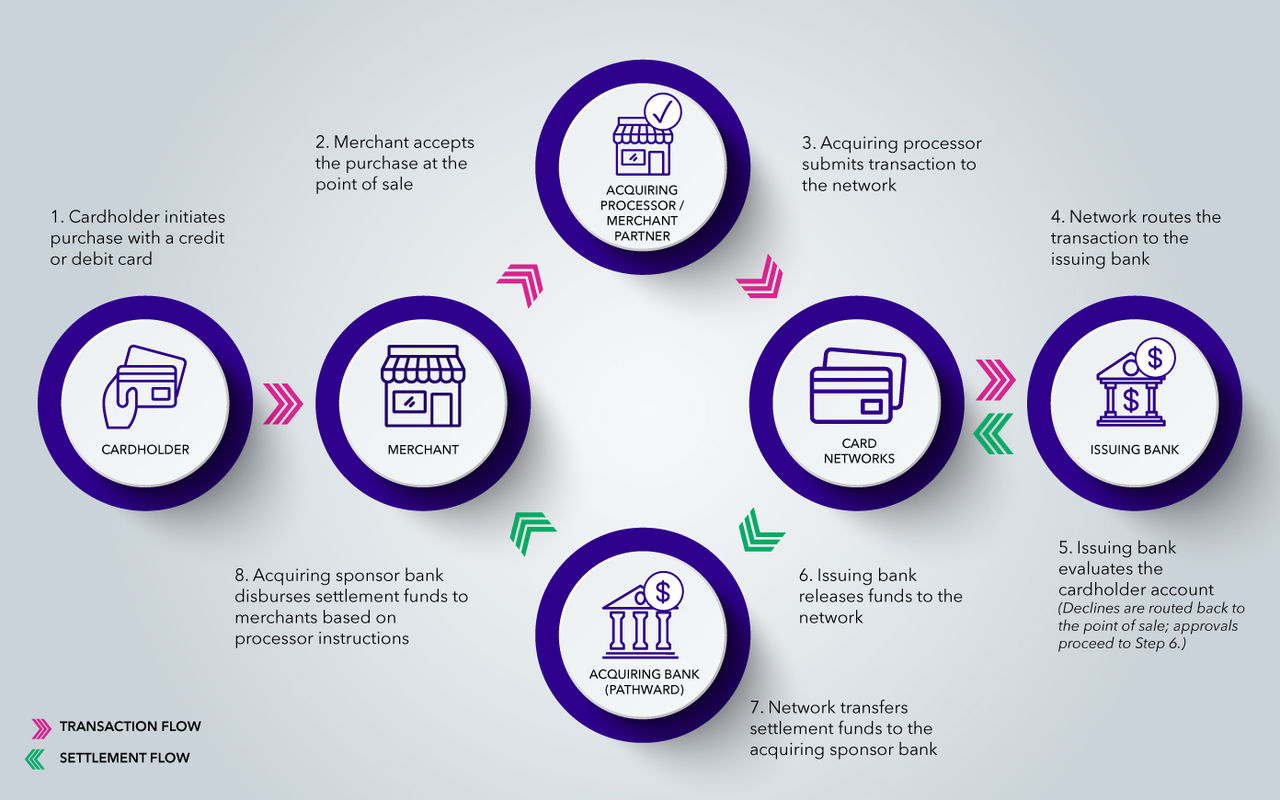
When a customer makes a purchase, the acquiring bank working with the merchant’s payment processor routes the transaction through the card network to the issuing bank for authorization. Once approved, the acquiring bank facilitates settlement, ensuring funds are transferred from the issuing bank and deposited into the merchant’s account in accordance with network and contractual timelines.
In a sponsorship model like Pathward’s, the bank provides network sponsorship, settlement funding, and program oversight, while licensed acquiring processors manage merchant onboarding, processing, and day-to-day operations. The sponsor bank governs the program. The acquiring processor operates it.
Understanding the role of an acquiring bank is just the first step. We’ll dive deeper and walk through exactly how acquiring banks operate, explain the differences between acquiring and issuing banks, and highlight how these distinctions can impact businesses.
Transaction Terminology: Who Does What
Payments have multiple entities involved, and their roles can feel like they overlap. Here is a breakdown of the four key parties that show up in nearly every transaction: what they do, who they serve, and examples of each.
Player | What They Do | Serves Who | Example Parties |
Issuing Bank | Issues or provides credit/debit cards, assesses cardholder account | Consumers | Banks with consumer-focused capabilities |
Acquiring Bank | Network access, settlement funding, oversight of merchant payment processing | Merchants and processors | Banks with merchant services capabilities |
Payment Processor | Routes transaction data between parties; acts as a messenger | Consumers, merchants, and processors | Technology-first processors and fintechs |
Card Network | Connects issuing & acquiring banks, provides the infrastructure and rails that payments travel on | Acquiring processor, acquiring sponsor bank, and issuing bank | Major card networks or leading card networks |
Here is what a typical transaction looks like. This flow shows how funds and approvals move among parties in every transaction:
The Main Responsibilities of an Acquiring Bank
An acquiring bank is a regulated financial institution that enables merchants to participate in the card payments ecosystem by providing access to card networks and settlement services. While transaction processing is typically performed by third-party payment processors, the acquiring bank provides essential oversight during a transaction.
Key responsibilities of an acquiring bank include:
- Establishing and sponsoring merchant accounts, including underwriting and compliance with card networks and regulatory requirements
- Providing access to card networks through sponsorship, allowing merchants to accept card payments
- Facilitating the authorization and movement of funds by coordinating payment processors, card networks, and issuing banks
- Settling funds to merchants, ensuring money from approved transactions is deposited in accordance with network rules
- Overseeing risk, fraud, and program compliance, including monitoring merchant activity and enforcing controls in partnership with processors
While payment processors handle transaction routing, authorization messaging, and technical connectivity, the acquiring bank remains the financial counterpart responsible for settlement, regulatory compliance, and program integrity.
Acquiring Bank Costs and Fees
When a customer pays a merchant, the merchant doesn’t receive full payment of that item. Typically, the processing costs include interchange, network assessments, processor fees, and acquiring or sponsorship fees, which collectively cover the cost and risk of processing card transactions. Interchange is generally paid to the issuer, other fees vary by model or contract.
How to Choose an Acquiring Bank for Your Business
Selecting the right acquiring bank depends on your processing model. In practice, businesses and merchants work with payment processors or platforms that are sponsored by an acquiring bank. In sponsor-bank relationships, banks like Pathward provide program oversight and banking infrastructure that enable processors to deliver solutions to merchants.